Improve Your Home with Professional Care
By Kirk Hayes, Founder of Kincaid
You would think that someone who spends his days helping other people manage their homes would have moving into a new house completely figured out.
Apparently, not quite.
My family recently moved, and while I know better than most what goes into taking care of a home, the experience was a good reminder of something we talk about constantly at Kincaid:
The work doesn’t stop when you get the keys.
In some ways, that’s when it really begins.
There are boxes to unpack, furniture to arrange, rooms to organize, and the usual logistics of getting everyone settled.
But then there’s the other list.
The one you don’t necessarily think about until you’re actually living in the house.
A door that needs adjusting. A light fixture you want replaced. A television mount that needs removing, only to reveal another project underneath. A few things from the inspection report you meant to address before moving in.
And somehow, that list seems to grow every time you walk into another room.
It reminded me why home management matters, even for someone who works in the business.
The House May Be Move-In Ready. Your To-Do List Probably Isn’t.
When you’re buying a home, most of your attention is focused on the big things.
The location. The layout. The inspection. The closing date. The actual move.
You’re imagining where the furniture will go and what life will look like once everyone is settled.
What you don’t necessarily imagine is spending your first few weekends coordinating a dozen little projects.
We bought our house from a family with older kids, so there were televisions mounted in nearly every bedroom. With younger kids, we didn’t want TVs in all those rooms, so we started taking them down.
That’s when we discovered that the paint behind the televisions had faded differently from the rest of the walls. What seemed like a simple project suddenly meant repainting entire walls just to make everything look right.
And it wasn’t just the televisions. The previous owners had hung artwork throughout the house, which looked great when we toured it. But once the pictures came down, we found drywall anchors, holes, and scratches left behind.
Now we had walls to patch and repaint throughout our new home.
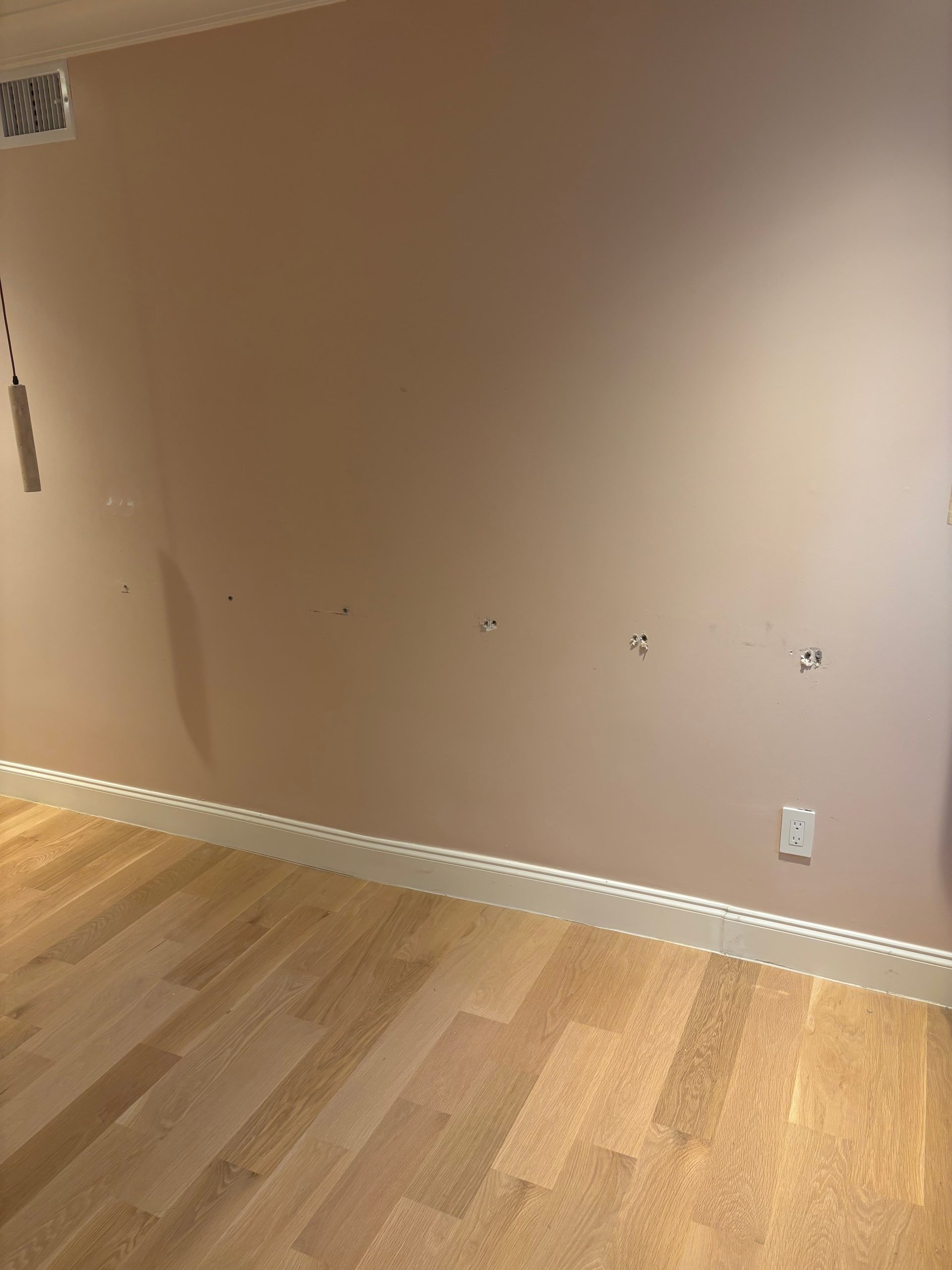
None of these were major problems, and certainly nothing that would have changed our decision to buy the house. But they were projects we hadn’t anticipated. And they were a good reminder that even a beautiful, well-maintained home can come with a surprisingly long to-do list.
This is simply the reality of moving into a home that was previously set up for someone else’s life.
Their furniture fit differently. Their routines were different. They may have been perfectly happy with things you’d prefer to change.
And once you start making the house your own, the projects begin.
It’s the Little Things That Add Up
A lot of move-in projects aren’t particularly complicated.
Maybe you want a television mounted in the family room. Shelving installed in a closet. A chandelier replaced over the dining table. Cabinet hardware updated.
Then there are the small repairs.
The door that won’t latch properly. The faucet that drips. The garage door that needs servicing. The exterior light that doesn’t work.
On their own, these are manageable projects.
Together, they can consume an extraordinary amount of time.
Because the actual repair or installation is often only part of the work.
First, you have to figure out who to call.
Then you need to find someone reliable, explain the project, get an estimate, coordinate schedules, arrange access, and make sure the work gets finished correctly.
Multiply that by ten projects, and suddenly you’ve become the project manager for your own house.
That’s a lot to take on while you’re also trying to get your family settled.
One Thing I’d Do Differently: Get More Done Before Move-In Day
If I could give someone preparing to move one piece of advice, it would be to think carefully about what can be completed before the moving truck arrives.
An empty house is often much easier to work in.
Painting is simpler without furniture to move. Replacing light fixtures is less disruptive before rooms are fully arranged. Certain repairs are easier when contractors don’t have to work around boxes, pets, and the normal activity of a busy household.
And if you’re planning several projects, the order matters.
You probably don’t want someone installing new shelving right before painters arrive. You don’t want furniture delivered into a room where flooring work is still underway.
A little coordination on the front end can save a lot of frustration. We experienced this firsthand with several projects we needed completed before moving in. Getting the timing right required more coordination than I initially expected, and it reinforced just how valuable that planning can be.
Of course, not everything can be completed before move-in.
Closing dates change. Contractors have schedules. Unexpected issues come up.
But identifying which projects should happen first, and which can wait, makes the entire process more manageable.
For homeowners dealing with multiple repairs or installations, Kincaid’s home repairs and project coordination services can help organize the moving pieces and keep work progressing in the right order.
Living in the House Changes Your Priorities
There’s another thing I’ve been reminded of through this move.
You don’t always know what a house needs until you’ve lived in it.
During a showing, you might notice the beautiful kitchen or the natural light in the living room.
After moving in, you start noticing different things.
The outlet that’s inconveniently located. The closet that doesn’t have enough storage. The room that’s warmer than the rest of the house. The outdoor space that needs better lighting.
Some things you thought would be priorities turn out not to matter much. Other things you barely noticed become surprisingly important.
We’ve discovered all kinds of little quirks since moving in. Light switches in strange places, including some outside the rooms they control. Multiple switches that each operate just one or two lights instead of the whole room. A door that’s difficult to open and close. A stair that squeaks.
But one of the more interesting surprises involved our attic.
In some older Dallas homes, attic access is nothing more than a plywood hatch that you push up, using your own ladder to climb inside. That’s how ours was set up, except the entrance was located inside a closet.
I didn’t think much about it during our walkthroughs. But the first time I went to change the HVAC filters, I realized what a hassle it was going to be. Every time we needed access, I’d have to remove all the clothes from the closet to keep attic dust and insulation from falling onto them.
Not exactly convenient for something that requires regular maintenance.
So I had our Kincaid team install a new attic entrance with a pull-down ladder. Now changing filters and servicing the HVAC system is much easier and far less disruptive.
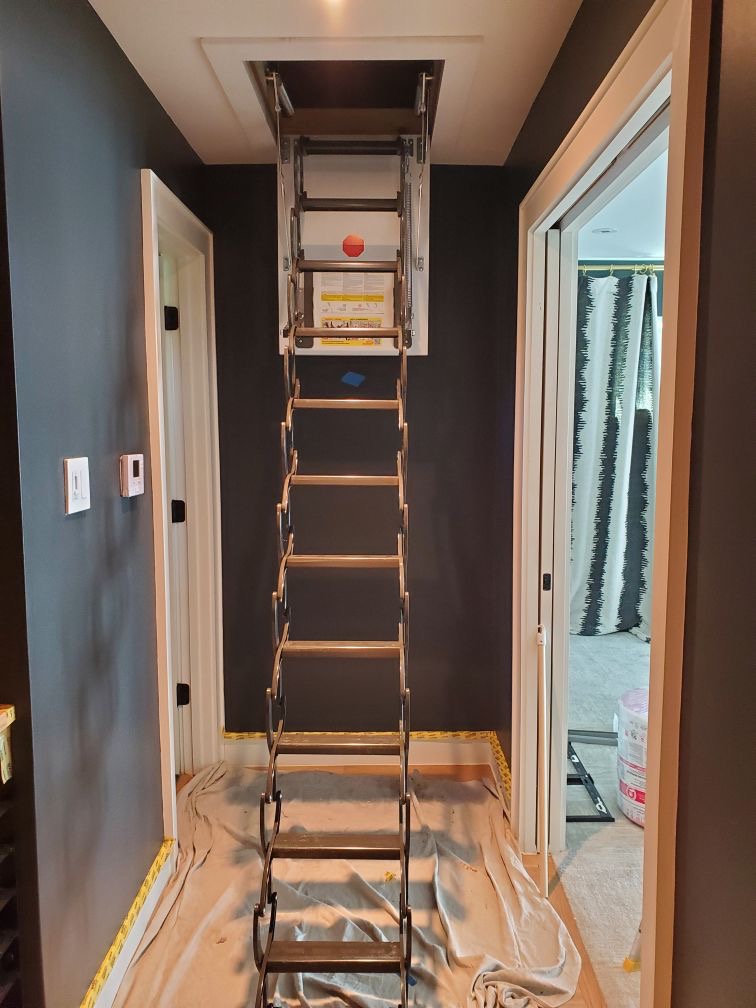
It wasn’t a project I had planned before buying the house. It was something I only recognized as a priority once we started living there.
That’s why I think homeowners should distinguish between projects that need immediate attention and improvements that can wait until they’ve had time to understand how they actually use the house.
Safety concerns, active leaks, and essential repairs shouldn’t wait.
But not every cosmetic improvement needs to happen during the first month.
Sometimes living in the space for a while helps you make better decisions.
The Hardest Part Isn’t Always the Work. It’s Managing Everyone Doing It.
This is something I understood professionally long before our move, but experiencing it again personally reinforced the point.
A home doesn’t operate through one service provider.
There’s the plumber, the electrician, the handyman, the HVAC technician, the landscaper, the cleaning company, and sometimes a general contractor overseeing larger improvements.
Each has a different schedule.
Each needs access to the property.
And each project has its own questions, decisions, and follow-up.
Before we moved in, we needed three things done: plumbing, painting, and cleaning.
Sounds straightforward enough. Three projects, three vendors.
But each had their own schedule and timeline, and the order of operations mattered more than you might think.
We wanted the house cleaned after painting so we wouldn’t be left with drywall dust and paint debris. But both the painters and cleaners needed working water and drains, which meant the plumbing couldn’t simply happen whenever the plumber was available.
The plumbing project itself took about two weeks. Painting took four days, and cleaning took one.
I ultimately coordinated the work so the plumber could get started first, the painters could come in while the plumbing project was underway, the plumber could finish, and the cleaners could come in last.
That meant making sure the drain lines were connected and water was available before the painters arrived, and confirming that all the plumbing work was finished before the cleaners came through.
Lots of phone calls. Lots of double-checking schedules. And lots of trips through the house myself to make sure everything was ready for the next person.
And that was just three vendors.
It’s a perfect example of something we see all the time at Kincaid. The individual projects aren’t necessarily the hardest part. It’s making sure the right people show up at the right time, have what they need to do their jobs, and don’t create additional work for the next person.
And when you’re working, raising a family, or simply trying to enjoy your new home, the last thing you want is to spend every free afternoon waiting for another contractor.
That’s the gap Kincaid was designed to fill.
Through our handyman services and project coordination support, we help homeowners organize repairs, installations, and household projects without having to personally manage every detail.
For larger projects, that might mean coordinating several trades and making sure work happens in the right sequence.
For smaller projects, it might simply mean getting a reliable professional scheduled and making sure the job gets finished.
Either way, the goal is the same: fewer things for the homeowner to chase down.
A New Home Needs More Than a Moving Checklist
There’s an important difference between moving into a house and getting it set up for the long term.
Once the boxes are gone, the home still needs ongoing attention.
HVAC systems need servicing. Filters need changing. Gutters need cleaning. Landscaping needs maintenance. Equipment eventually needs repair or replacement.
And when you’ve just moved, you may not know much about the home’s maintenance history.
When was the water heater last serviced?
How old is the HVAC system?
Which contractor installed the roof?
Where are the appliance warranties?
These are the kinds of details that become much more valuable when something goes wrong.
One of the things we emphasize at Kincaid is building a clear understanding of the home itself, including its systems, service history, maintenance needs, and upcoming projects.
Through Kincaid Membership, homeowners have a dedicated home manager who helps coordinate ongoing services, track important information, and stay ahead of maintenance.
Instead of starting over every time something needs attention, there’s already someone familiar with the property.
And for someone who has just moved, that can make a meaningful difference.
For homeowners looking for a practical first-month checklist, we’ve also put together The New Homeowner’s Guide to Home Maintenance in Dallas, covering important safety checks, inspections, and maintenance priorities.
What Moving Reminded Me About Why We Started Kincaid
There’s a reason home management is valuable to busy homeowners.
It’s not necessarily because homes have become impossible to maintain.
It’s because the number of decisions, appointments, projects, and responsibilities involved in managing them can feel endless.
And those responsibilities compete with everything else in life.
Work. Family. Travel. School schedules. Weekends you’d rather spend doing something other than waiting for a contractor.
Moving reminded me how quickly even a well-organized homeowner can accumulate a list of things that need attention.
It also reminded me that most people don’t actually want to become experts in coordinating home repairs.
They want to enjoy their homes.
They want things to work.
And when something needs attention, they want to know there’s someone reliable who can handle it.
That’s what we’re trying to make possible at Kincaid.
Not a home without any problems.
A home where the problems don’t have to become your second job.
The Best Part of Moving Is Getting to Enjoy the Home
Moving is a lot of work.
Even when everything goes relatively smoothly, there are always more details than you expect.
But eventually, the boxes disappear. The rooms start to feel familiar. The projects become less urgent.
And the house begins to feel like home.
That’s the part worth looking forward to.
If there’s one thing this move reinforced for me, it’s that homeowners shouldn’t have to spend all their time managing the place where they’re supposed to relax.
At Kincaid, we help make that possible.
Whether you’re moving into a new home, tackling a list of repairs, or looking for ongoing support with the many details of homeownership, our team can help coordinate the work and keep things moving.
Getting settled into a new home? Explore Kincaid’s home management services or schedule a conversation with our team.